Skin tightening is a broad term for treatments designed to improve the appearance of loose, crepey, or mildly sagging skin. These treatments are commonly used on areas such as the face, jawline, neck, abdomen, arms, thighs, and other areas where skin laxity may become noticeable over time.
Skin naturally changes with age. Collagen and elastin, two important proteins that help skin stay firm and flexible, gradually decline. Sun exposure, weight changes, pregnancy, genetics, smoking, stress, and normal aging can all affect skin texture and firmness. As a result, skin may begin to look thinner, softer, looser, or less lifted than it once did.
Skin tightening treatments are meant to support firmer-looking skin by encouraging collagen remodeling, heating deeper layers of tissue, or creating controlled stimulation that helps the skin’s natural repair process. Some treatments are noninvasive, meaning they do not break the skin. Others are minimally invasive, such as radiofrequency microneedling. Surgical procedures, such as a facelift, neck lift, tummy tuck, or body lift, may be needed for more significant loose skin.
For anyone considering skin tightening, the most important thing to know is that results vary. These treatments can be helpful for the right candidate, but they are not magic and they do not create the same results as surgery. A qualified provider can evaluate your skin, goals, health history, and treatment options before recommending a plan.
What Causes Skin to Become Loose?
Skin laxity happens for several reasons. Aging is one of the biggest factors. Over time, the body produces less collagen and elastin, and the skin’s support structure becomes weaker. This can lead to fine lines, wrinkles, sagging, and changes in facial or body contours.
Sun exposure can speed up these changes. UV damage breaks down collagen and elastin, which may lead to thinner, less resilient skin. Weight changes can also contribute. When skin stretches during weight gain or pregnancy, it may not fully tighten again after weight loss, especially if the stretching was significant or happened over a long period of time.
Genetics also matter. Some people naturally maintain firmer skin longer, while others develop laxity earlier. Lifestyle factors such as smoking, poor sleep, dehydration, and inconsistent skincare can also affect how the skin looks and ages.
Skin tightening treatments do not stop aging, but they may help improve the appearance of mild to moderate laxity by supporting collagen and tissue remodeling.
How Does Non-Surgical Skin Tightening Work?
Most non-surgical skin tightening treatments work by delivering controlled energy into the deeper layers of the skin. This energy creates heat beneath the surface. The heat may cause existing collagen fibers to contract and may stimulate the body to produce new collagen over time.
The American Board of Cosmetic Surgery explains that non-surgical skin tightening commonly uses ultrasound energy, radiofrequency energy, or a combination of radiofrequency and intense pulsed light. These treatments generally work by heating deeper skin layers to stimulate collagen and elastin production and gradually improve skin tone and texture.
The key word is gradually. Unlike surgery, non-surgical tightening usually does not produce an immediate dramatic lift. Many patients notice subtle changes over several weeks or months as collagen remodeling occurs.
This is why expectations matter. Skin tightening is often best for people with mild to moderate looseness who want a natural-looking improvement and do not need significant skin removal.
Radiofrequency Skin Tightening
Radiofrequency, often called RF, is one of the most common technologies used for skin tightening. RF treatments use energy to heat tissue below the skin’s surface. This heat may support collagen remodeling and a firmer appearance over time.
RF can be used on the face and body depending on the device and treatment plan. Some RF treatments are completely noninvasive, while others combine radiofrequency with microneedling.
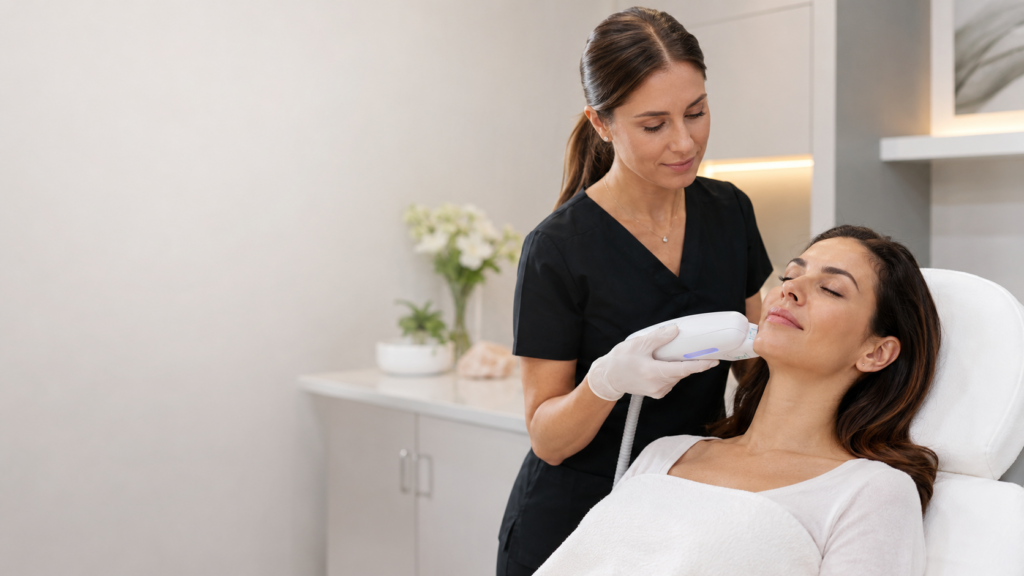
Noninvasive RF treatments typically involve a handheld device that glides over the skin while delivering heat. Patients may feel warmth, pressure, or mild discomfort. There is often little to no downtime, although temporary redness, swelling, or tenderness may occur.
RF microneedling works differently. It uses tiny needles to create controlled micro-injuries in the skin while delivering radiofrequency energy deeper into the tissue. Because it breaks the skin, RF microneedling usually involves more downtime than noninvasive RF. Redness, swelling, pinpoint bleeding, rough texture, or sensitivity may occur after treatment.
RF skin tightening may be used for concerns such as mild facial laxity, early jowling, neck texture, crepey skin, acne scars, and body skin laxity, depending on the device and patient. However, it is not appropriate for everyone. A provider should review your skin type, medical history, medications, implanted devices, and treatment goals before recommending RF.
Ultrasound Skin Tightening
Ultrasound skin tightening uses focused ultrasound energy to reach deeper layers of tissue beneath the skin. The goal is to stimulate collagen production and support a lifted or firmer appearance over time.
Ultrasound-based treatments are often used for areas such as the brow, lower face, jawline, neck, and chest. Cleveland Clinic lists ultherapy among facial resurfacing and rejuvenation procedures that may help tighten and lift sagging skin around the face and neck.
Ultrasound treatments are usually noninvasive. The provider applies ultrasound gel and uses a device to deliver focused energy to targeted depths. Patients may feel heat, tingling, prickling, or brief discomfort during the treatment. Downtime is often minimal, although temporary redness, swelling, soreness, or tenderness can happen.
Like RF, ultrasound tightening results develop gradually. Some patients may see early changes, but collagen-related improvements often take weeks to months. The final result depends on skin quality, age, treatment area, device settings, provider experience, and the body’s response.
Laser Skin Tightening and Resurfacing
Some laser treatments may also support firmer-looking skin. Lasers use light energy to target the skin. Depending on the type of laser, treatment may focus on texture, tone, fine lines, sun damage, scars, or collagen remodeling.
Ablative lasers remove outer layers of skin and usually involve more downtime. Non-ablative lasers heat deeper tissue without removing the surface layer, which may involve less downtime but often requires multiple sessions.
Laser treatments are not the same as RF or ultrasound, and not every laser is used primarily for tightening. Some are better for resurfacing, pigmentation, redness, scars, or fine lines. The Cleveland Clinic notes that facial resurfacing and rejuvenation procedures may include chemical peels, dermabrasion, microdermabrasion, laser and light-based treatment, and ultherapy.
Because lasers interact with pigment, skin type matters. People with darker skin tones or a history of hyperpigmentation may need special caution and an experienced provider. A consultation is important before choosing any laser treatment.
RF Microneedling
RF microneedling has become a popular option for patients who want to improve texture and support skin firmness. It combines microneedling with radiofrequency energy. The needles create controlled channels in the skin, and RF energy is delivered into deeper layers.
This treatment may be used for mild laxity, acne scars, enlarged pores, fine lines, texture changes, and some body concerns. Because the treatment creates controlled injury, the skin goes through a healing response that may support collagen production.
Downtime varies. Patients may have redness, swelling, sensitivity, roughness, or pinpoint marks for a few days. Multiple treatments may be recommended, depending on the concern.
RF microneedling is more involved than a facial or topical skincare treatment. It should be performed by a trained provider who understands skin depth, energy settings, skin type, and safety risks.
Surgical vs. Non-Surgical Skin Tightening
Non-surgical skin tightening can be a good option for mild to moderate skin laxity, but it has limits. It cannot remove large amounts of loose skin. It cannot reposition deeper facial structures the way surgery can. It cannot create the same result as a facelift, neck lift, tummy tuck, or body lift.
The American Board of Cosmetic Surgery notes that non-surgical skin tightening is generally best suited for patients bothered by mild to moderate skin laxity who do not need the more dramatic lifting and skin removal possible with cosmetic surgery.
This distinction is important. A patient with early jawline softness may be a good candidate for non-surgical tightening. A patient with significant loose skin after major weight loss may need to discuss surgical options.
A good provider should be honest about what non-surgical treatments can and cannot do.
What Areas Can Be Treated?
Skin tightening may be used on many areas of the face and body, depending on the device and patient goals. Common treatment areas include the jawline, cheeks, under the chin, neck, chest, abdomen, upper arms, thighs, knees, and areas with mild crepiness or looseness.
Not every technology is right for every area. Some devices are designed for the face and neck. Others can treat larger body areas. Some are better for texture, while others are better for deeper tightening.
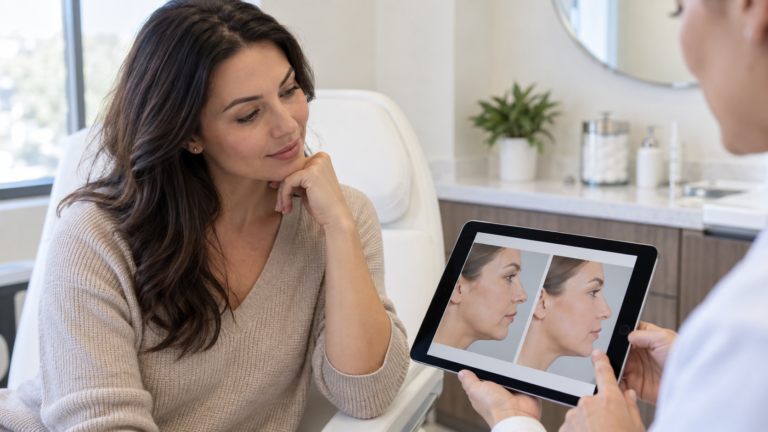
During a consultation, the provider should evaluate the treatment area, skin thickness, degree of laxity, medical history, and whether the concern is mostly skin, fat, muscle, or structural support. Sometimes what a patient sees as “loose skin” may actually involve volume loss, fat distribution, muscle laxity, or bone structure. That is why the right treatment plan may include more than one approach.
What Does Treatment Feel Like?
The sensation depends on the type of treatment. RF may feel warm or hot. Ultrasound may feel like brief pulses of heat, tingling, or prickling. RF microneedling may feel more intense because needles are involved, although numbing cream is often used. Laser treatments may feel like heat, snapping, stinging, or prickling.
Comfort varies by patient and by device. Some treatments require no numbing. Others may use topical numbing, cooling, vibration, or other comfort measures.
Patients should tell their provider if the treatment feels too intense. More heat or discomfort does not always mean better results. Safe settings and proper technique matter.
When Do Results Appear?
Skin tightening results are usually gradual. Some patients may notice a temporary tighter feeling shortly after treatment, but collagen remodeling takes time. Many treatments show visible improvement over several weeks to months.
The American Board of Cosmetic Surgery explains that results from non-surgical skin tightening appear gradually over weeks or months and that multiple treatments may be needed to reach desired results.
The number of sessions depends on the device, treatment area, degree of laxity, and patient goals. Some ultrasound treatments may be done in one session. Some RF or RF microneedling plans may involve a series of treatments. Maintenance may also be recommended because the skin continues to age.
Who Is a Good Candidate?
A good candidate for non-surgical skin tightening usually has mild to moderate laxity, realistic expectations, and enough skin quality to respond to collagen stimulation. They may notice early sagging, crepey texture, mild jawline softness, or loose skin after small to moderate weight changes.
Skin tightening may not be the best choice for someone with significant excess skin, severe laxity, active infection, certain medical conditions, pregnancy, implanted electronic devices, poor wound healing, or unrealistic expectations. Specific restrictions depend on the technology.
The best way to know whether you are a candidate is to schedule a consultation with a qualified provider. They can examine your skin and recommend whether RF, ultrasound, laser, microneedling, surgery, skincare, or another option makes sense.
Are There Risks or Side Effects?
Skin tightening treatments can have side effects. Common temporary effects may include redness, swelling, tenderness, warmth, bruising, tingling, dryness, rough texture, or sensitivity. More serious but less common risks may include burns, pigmentation changes, scarring, infection, nerve irritation, or unsatisfactory results.
Risks depend on the treatment type, device settings, provider skill, skin type, aftercare, and patient health. This is why choosing a qualified provider matters.
Patients should share their medical history, medications, history of cold sores, skin conditions, pregnancy status, implanted devices, prior cosmetic procedures, and tendency toward scarring or hyperpigmentation before treatment.
Final Thoughts
Skin tightening refers to treatments designed to improve the appearance of mild to moderate loose skin by supporting collagen remodeling and firmer-looking tissue. Common options include radiofrequency, ultrasound, laser-based treatments, and RF microneedling. These treatments work in different ways, but many use controlled heat or stimulation to encourage the skin’s natural repair process.
Skin tightening can be helpful for the right patient, but it is not the same as surgery. Results are usually gradual, subtle, and dependent on skin quality, age, treatment area, device choice, and provider experience.
If you are considering skin tightening, start with a professional consultation. A qualified provider can explain your options, review risks and benefits, and help you choose a treatment plan that fits your skin, goals, and expectations.