
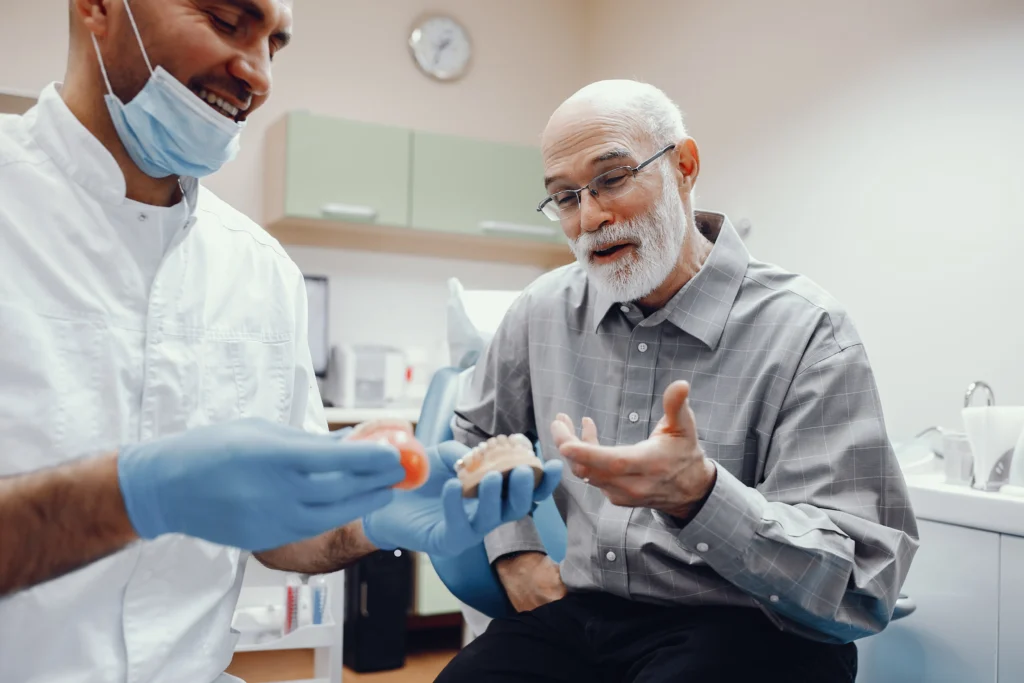
Tooth loss can affect more than the way your smile looks. Missing teeth may change how you chew, speak, smile, and feel in everyday situations. For many patients, the two most common tooth replacement options are dental implants and dentures. Both can help restore missing teeth, but they work very differently.
Dental implants are placed into the jawbone and support replacement teeth such as crowns, bridges, or implant-supported dentures. The FDA explains that dental implants are medical devices surgically implanted into the jaw to help restore chewing ability or appearance. Dentures, on the other hand, are removable appliances that replace missing teeth. The American Dental Association’s MouthHealthy resource describes dentures as removable appliances that can replace missing teeth and help restore a person’s smile.
Neither option is automatically right for everyone. The best choice depends on your oral health, jawbone structure, budget, comfort preferences, medical history, timeline, and long-term goals. Comparing dental implants and dentures can help you have a more informed conversation with your dentist.
What Are Dental Implants?
Dental implants are artificial tooth root replacements, usually made from titanium or another biocompatible material. They are placed into the jawbone during a surgical procedure. After healing, the implant can support a crown, bridge, or denture.
The Mayo Clinic explains that dental implant surgery replaces tooth roots with metal, screw-like posts and replaces missing or damaged teeth with artificial teeth that look and function much like real ones. Implants may be considered when dentures or bridgework do not fit well or when there are not enough natural tooth roots to support other replacement options.
Dental implants can be used for one missing tooth, several missing teeth, or a full arch of teeth. Some patients receive a single implant and crown. Others may receive implant-supported bridges or dentures.
Because implants involve surgery and healing, they usually require more planning than traditional removable dentures. A dentist or dental specialist will evaluate your gums, jawbone, medical history, medications, and overall health before deciding whether implants are appropriate.
What Are Dentures?
Dentures are removable replacements for missing teeth and surrounding tissues. They may be full or partial. Full dentures replace all teeth in the upper jaw, lower jaw, or both. Partial dentures replace several missing teeth while some natural teeth remain.
The Cleveland Clinic’s denture overview explains that dentures are removable oral appliances that replace missing teeth in the upper jaw, lower jaw, or both. They may be made from materials such as acrylic, resin, nylon, metal, or porcelain.
Dentures can help restore appearance and chewing ability, but they do not function exactly like natural teeth. They rest on the gums and may rely on suction, adhesive, clasps, or other support. Some patients adjust well to dentures, while others experience slipping, soreness, difficulty chewing certain foods, or changes in speech during the adjustment period.
Dentures may be a good option for patients who are not candidates for surgery, need a more affordable solution, or want a faster tooth replacement option.
Stability and Comfort
One of the biggest differences between dental implants and dentures is stability. Dental implants are anchored in the jawbone, so implant-supported teeth are typically more stable than traditional removable dentures. This can make chewing and speaking feel more secure for many patients.
Traditional dentures sit on top of the gums. A well-made denture can fit comfortably, but changes in the mouth over time may cause the fit to loosen. Bone and gum tissue can shrink after teeth are lost, which may affect how dentures sit. Dentures may need adjustments, relines, or replacement over time to maintain fit.
For some patients, removable dentures are comfortable and practical. For others, slipping or movement can be frustrating. Implant-supported dentures may offer a middle ground by combining the coverage of dentures with the added support of implants.
If stability is one of your biggest concerns, ask your dentist whether implant-supported options may be appropriate.
Chewing and Speaking
Both implants and dentures can improve chewing compared with having missing teeth, but they may feel different in daily use.
Dental implants often provide stronger chewing support because they are anchored into the jaw. This may make it easier to eat a wider variety of foods once healing is complete. However, implant treatment takes time, and patients must follow post-surgical instructions carefully during recovery.
Dentures can also restore chewing ability, but there may be a learning curve. Some patients need time to adjust to eating with dentures. Hard, sticky, or chewy foods may be more difficult, especially with lower dentures that have less natural suction than upper dentures.
Speech can also change with either option at first. Dentures may feel bulky until the mouth adjusts. Implants may feel more natural after restoration, but the final outcome depends on planning, placement, restoration design, and healing.
A dentist can help explain what to expect based on the specific type of denture or implant restoration being considered.
Appearance
Dental implants and dentures can both be designed to look natural. Modern dentures are customized to fit the patient’s mouth and face, while implant crowns and bridges are shaped and shaded to blend with surrounding teeth.
Appearance depends on the quality of the restoration, the health of the gums, facial structure, tooth position, and the skill of the dental team. A well-made denture can improve the look of a smile and support facial appearance. A well-planned implant restoration can also look very natural.
One difference is that dentures replace both teeth and some surrounding gum tissue, which can be helpful when there has been significant tissue loss. Implants replace missing tooth roots and support artificial teeth, but some patients may need additional procedures, such as bone grafting or gum tissue work, to create the right foundation.
The right choice is not only about how the teeth look on day one. It is also about how the restoration fits the mouth and supports the face over time.
Jawbone Health
Jawbone health is one of the major differences between implants and traditional dentures. When teeth are lost, the jawbone in that area may gradually shrink because it is no longer being stimulated by tooth roots.
Dental implants can help provide stimulation to the jawbone because they are placed into the bone. This is one reason implants may be recommended for some patients.
Traditional dentures rest on top of the gums and do not replace tooth roots. They may restore appearance and function, but they do not provide the same type of bone stimulation as implants. Over time, changes in the jawbone and gums can affect denture fit.
Not every patient has enough bone for implants right away. Some may need bone grafting or other procedures before implant placement. Others may not be good candidates due to health conditions, medications, smoking, uncontrolled gum disease, or other factors.
The FDA notes that overall health is an important factor in determining whether someone is a good candidate for dental implants, how long healing may take, and how long the implant may stay in place.
Treatment Timeline
Dentures are often faster than implants. In many cases, patients can receive dentures after extractions and healing, or in some cases, immediate dentures may be placed the same day teeth are removed. Adjustments may be needed as the gums heal and change shape.
Dental implants usually take longer because they involve evaluation, surgery, healing, and restoration. After the implant is placed, the bone often needs time to heal around it before the final crown, bridge, or denture is attached. Some cases may require extractions, bone grafting, sinus lifts, or gum treatment before implants can be placed.
The timeline varies widely depending on the patient. Some implant cases are straightforward. Others take several months or longer.
If you need teeth replaced quickly, dentures may provide a faster initial option. If your priority is long-term stability and you are a good candidate, implants may be worth the longer timeline.
Cost Considerations
Cost is another major factor. Traditional dentures are usually less expensive upfront than dental implants. This can make dentures more accessible for patients who need a full set of replacement teeth or who are working within a limited budget.
Dental implants usually cost more upfront because they involve surgery, implant components, imaging, possible grafting, and custom restorations. However, implants may offer long-term value for some patients because they are designed to be durable and stable when properly cared for.
Insurance coverage varies. Some plans may cover part of dentures, implants, extractions, or related procedures, while others may have limitations or exclusions. Patients should ask for a written treatment plan and check with their insurance provider before deciding.
It is also important to compare maintenance costs. Dentures may need relines, adjustments, repairs, adhesives, or replacement over time. Implants require ongoing dental care, professional cleanings, and monitoring to protect gum and bone health.
Maintenance and Daily Care
Dentures and implants require different care routines.
Dentures usually need to be removed for cleaning. Patients may need to brush them daily, soak them as instructed, clean the gums and tongue, and avoid sleeping in them unless a dentist recommends otherwise. Dentures can break if dropped and may need professional adjustment if they cause sore spots.
Dental implants are cared for more like natural teeth, but they still require careful hygiene. Brushing, flossing, professional cleanings, and regular dental visits are important. Gum inflammation and infection around implants can occur, especially if plaque is not controlled.
The FDA advises patients considering implants to talk with their dental provider about benefits, risks, and whether they are candidates. That conversation should include maintenance and long-term care expectations.
No tooth replacement option is maintenance-free. The best results depend on daily care and regular dental follow-up.
Risks and Limitations
Dental implants involve surgery, so they carry surgical risks such as infection, delayed healing, nerve injury, sinus complications, implant failure, or problems with the surrounding bone or gum tissue. These risks vary based on health, anatomy, surgical planning, habits, and aftercare.
Dentures do not require implant surgery, but they have their own limitations. They may slip, rub, cause sore spots, affect taste or speech, require adhesive, or need periodic adjustment. Poorly fitting dentures can make eating uncomfortable and may irritate the gums.
The FDA’s dental implant guidance recommends discussing benefits and risks with a dental provider before choosing implants. Patients should also talk openly about medical conditions, medications, smoking, diabetes, bone health, gum disease, and previous dental problems.
How to Decide Which Option Fits You
Choosing between dental implants and dentures starts with a dental evaluation. Your provider may examine your mouth, take X-rays or 3D images, review your medical history, evaluate gum health, and discuss your goals.
Dentures may make sense if you want a removable option, need a faster solution, are not ready for surgery, have budget limitations, or need to replace many teeth at once.
Dental implants may make sense if you want a more stable option, have enough healthy bone, are a good surgical candidate, and are willing to invest more time and cost into treatment.
Some patients choose a combination, such as implant-supported dentures. This can provide more stability than traditional dentures while replacing many teeth.
Final Thoughts
Dental implants and dentures can both help replace missing teeth, but they differ in stability, cost, timeline, maintenance, comfort, and long-term planning. Dentures are removable appliances that can restore appearance and function, often with a lower upfront cost. Dental implants are surgically placed into the jaw and can support crowns, bridges, or dentures with added stability.
There is no one-size-fits-all answer. The best choice depends on your oral health, jawbone structure, medical history, budget, and personal goals.
If you are comparing dental implants and dentures, schedule a consultation with a qualified dentist. They can explain your options, review risks and benefits, and help you choose a tooth replacement plan that supports your health, comfort, and confidence.