Watching a child’s adult teeth come in can feel exciting, strange, and sometimes a little confusing. Baby teeth fall out, permanent teeth start appearing, and suddenly the smile looks bigger, crowded, uneven, or awkward. For many children, this transition is completely normal. Adult teeth often look large at first, and the mouth may go through an uneven “in-between” stage before everything settles.
However, there are also times when the way adult teeth come in may signal that a child should be checked by a dentist or orthodontist. Crowding, delayed eruption, crossbites, extra teeth, missing teeth, early baby tooth loss, and jaw growth issues can sometimes be easier to manage when they are noticed early.
Parents do not need to diagnose the problem at home. The goal is to know what to watch for, keep regular dental visits, and ask questions if something seems unusual.
Why Adult Teeth Can Look Awkward at First
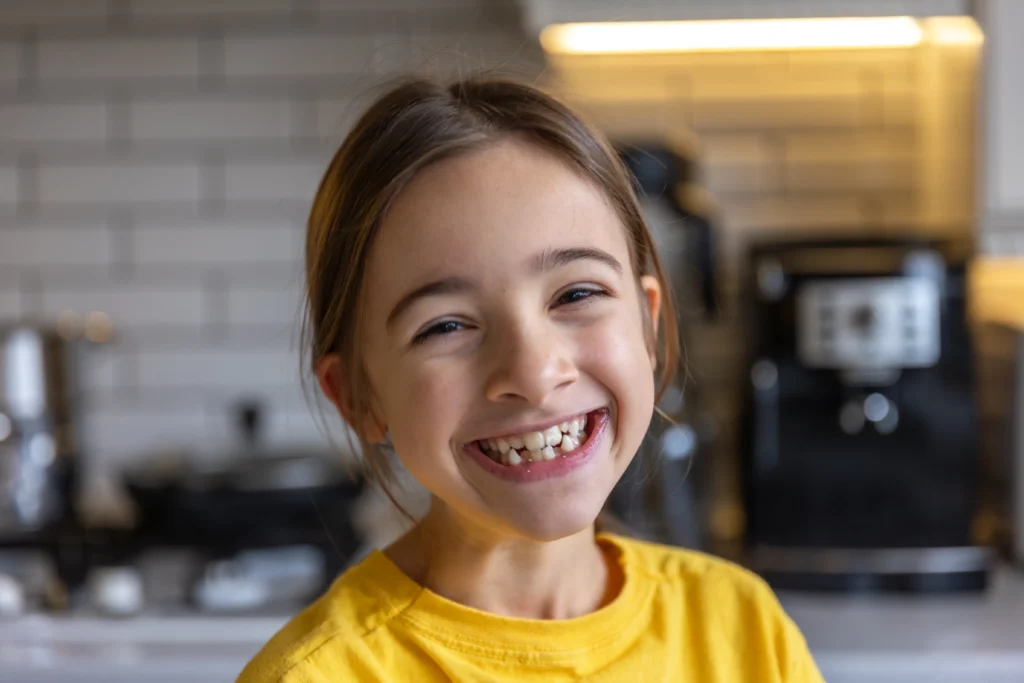
When adult teeth first come in, they may look too large for the child’s face. This is common because permanent teeth are meant to last into adulthood, while the child’s jaw and facial structures are still growing. The front teeth may look big, slightly uneven, spaced, or not perfectly aligned at first.
This does not always mean braces are needed right away. Some spacing and irregularity can be part of normal development. However, parents should still pay attention to patterns that may suggest the teeth do not have enough room, are coming in at an unusual angle, or are affecting the bite.
The American Academy of Pediatric Dentistry explains that guidance of eruption and development of the primary, mixed, and permanent teeth is an important part of comprehensive oral healthcare for children and adolescents.
Know the Mixed Dentition Stage
The “mixed dentition” stage is when a child has both baby teeth and permanent teeth. This usually includes a combination of loose baby teeth, gaps, newly erupted adult teeth, and adult teeth still waiting under the gums.
This stage can be uneven because teeth do not all come in at the same time. One side may change before the other. A tooth may look slightly rotated at first. The front teeth may have spaces. Molars may come in before parents notice because they erupt behind the baby teeth rather than replacing one.
Mixed dentition is an important time for dental monitoring because the child’s bite, spacing, jaw growth, and eruption pattern are still developing. The AAPD notes that management of the developing dentition includes concerns such as tooth eruption, missing or extra teeth, crossbite, oral habits, and space maintenance.
Watch for Adult Teeth Coming in Behind Baby Teeth
One common concern is when an adult tooth appears behind a baby tooth before the baby tooth falls out. Parents sometimes call these “shark teeth,” especially when they happen on the lower front teeth.
This can happen when the permanent tooth comes in slightly behind the baby tooth instead of directly underneath it. Sometimes the baby tooth loosens and falls out on its own. Other times, the baby tooth stays firm and the adult tooth continues coming in behind it.
If the baby tooth is not loosening, if the adult tooth is significantly out of position, or if several teeth are erupting this way, a dentist should take a look. The dentist can determine whether monitoring is enough or whether the baby tooth needs help coming out.
Crowding Can Become More Noticeable
Crowding happens when there is not enough room for the adult teeth to come in comfortably. Parents may notice teeth overlapping, rotating, erupting behind or in front of other teeth, or appearing blocked.
Some crowding can become more noticeable as the permanent incisors come in. Adult teeth are larger than baby teeth, so a child who had no spacing between baby teeth may have less room available for permanent teeth.
Crowding does not always mean immediate treatment is needed, but it is worth discussing with a dentist or orthodontist. The American Association of Orthodontists recommends that children have their first orthodontic checkup when an orthodontic problem is recognized and no later than age 7, because many children have enough permanent teeth by then for an orthodontist to evaluate development.
Delayed Adult Teeth Should Be Checked
Sometimes a baby tooth falls out, but the adult tooth does not come in for a long time. A little waiting can be normal, but a long delay may deserve evaluation.
Delayed eruption may happen because the adult tooth is blocked, missing, crowded, impacted, or coming in at an unusual angle. It may also be related to early baby tooth loss, trauma, space loss, or other developmental factors.
Parents should ask a dentist if one side is much slower than the other, if a baby tooth was lost months ago with no sign of the adult tooth, or if a tooth appears to be stuck under the gum. Dental X-rays may help show whether the permanent tooth is present and where it is positioned.
The AAPD includes ectopic eruption, impacted teeth, missing teeth, and extra teeth among developing dentition concerns that may require diagnosis and management.
Baby Teeth That Will Not Fall Out
A baby tooth that stays in place longer than expected may not be a problem by itself, but it can sometimes signal that the adult tooth underneath is missing, delayed, blocked, or not following the usual eruption path.
Parents should not force a baby tooth out if it is not ready. A baby tooth that is slightly loose can often be wiggled naturally, but a firm baby tooth should be evaluated rather than pulled at home.
If one baby tooth remains long after the matching tooth on the other side has fallen out, or if a permanent tooth is coming in elsewhere, a dentist can check whether the eruption pattern is normal.
Early Baby Tooth Loss Can Affect Spacing
Baby teeth are not just temporary placeholders. They help children chew, speak, and smile, and they also help guide permanent teeth into position. The American Academy of Pediatric Dentistry notes that baby teeth aid in forming a path that permanent teeth can follow when they are ready to erupt.
If a baby tooth is lost too early because of decay, injury, or extraction, nearby teeth may drift into the empty space. That can leave less room for the permanent tooth later.
In some cases, a dentist may recommend a space maintainer to help preserve room for the adult tooth. This depends on the child’s age, which tooth was lost, how soon the permanent tooth is expected, and the child’s overall development.
Extra Teeth Can Block Eruption
Some children develop extra teeth, also called supernumerary teeth. These may not be obvious without an exam or X-ray, but they can sometimes block permanent teeth from erupting normally.
Extra teeth are one reason a permanent tooth may not appear when expected. They can also contribute to crowding, spacing issues, or unusual eruption paths.
The AAPD includes supernumerary teeth among the issues considered in managing the developing dentition and occlusion.
If a child has a tooth that seems delayed, blocked, or erupting in the wrong place, the dentist may use imaging to see whether an extra tooth is part of the problem.
Missing Permanent Teeth May Not Be Obvious Right Away
Some children are born without certain permanent teeth. This is called congenitally missing teeth. Parents may not know unless a dentist takes X-rays or notices that a baby tooth is not being replaced as expected.
Missing permanent teeth can affect spacing, bite development, and future treatment planning. In some cases, the baby tooth may stay in place longer. In others, orthodontic or restorative planning may be needed later.
The AAPD includes congenitally missing teeth as one of the developing dentition issues that may need diagnosis and planning.
Watch for Crossbites
A crossbite happens when upper and lower teeth do not meet in the usual relationship. For example, an upper tooth may bite inside the lower tooth instead of outside it. Crossbites can involve front teeth or back teeth.
Parents may notice that the child’s teeth look reversed in one area, the jaw shifts when biting down, or the child chews more comfortably on one side. Crossbites should be evaluated because they may affect tooth wear, jaw growth, chewing, and bite development.
The AAPD includes crossbite and malocclusion among developing dentition concerns. An orthodontist can determine whether a crossbite should be monitored or treated early.
Watch for Open Bites or Deep Bites
An open bite means the front teeth do not touch when the child bites down. A deep bite means the upper front teeth overlap the lower front teeth more than expected.
These bite patterns can be related to jaw growth, tooth position, thumb sucking, tongue habits, airway factors, or inherited growth patterns. They may affect speech, chewing, tooth wear, and long-term bite function.
Parents may notice that the child cannot bite into certain foods well, the front teeth do not meet, or the lower teeth seem hidden when the child bites down. These patterns are worth mentioning during dental visits.
Thumb Sucking and Oral Habits Can Affect Tooth Position
Thumb sucking, finger sucking, pacifier use beyond early childhood, tongue thrusting, and certain oral habits can influence how teeth and jaws develop. The effect depends on the habit’s intensity, frequency, duration, and the child’s growth pattern.
Not every habit causes a major orthodontic problem, but persistent habits may contribute to open bites, narrow arches, protruding front teeth, or bite changes.
The AAO notes that some orthodontic problems can be acquired over time through habits such as thumb or finger sucking, mouth breathing, abnormal swallowing, dental disease, accidents, or early or late loss of baby teeth.
If a habit continues as adult teeth begin coming in, parents should ask a dentist or orthodontist for guidance.
Mouth Breathing May Be Worth Discussing
Mouth breathing can be related to allergies, nasal obstruction, enlarged tonsils or adenoids, airway concerns, habits, or other factors. It may also be seen with certain facial growth or bite patterns.
Parents may notice that a child sleeps with their mouth open, snores, has dry lips, drools at night, or seems to breathe through the mouth even during the day. While mouth breathing does not automatically mean there is an orthodontic problem, it is worth discussing with a dentist, pediatrician, or other provider.
The AAO includes mouth breathing among acquired factors that can contribute to orthodontic problems over time.
Teeth Coming in at Strange Angles
Permanent teeth do not always erupt perfectly straight. Some angle changes are part of normal development, especially while nearby teeth are still coming in. However, teeth that come in dramatically sideways, high in the gums, behind other teeth, or far out of the arch should be checked.
A tooth may erupt at an unusual angle because of crowding, lack of space, an extra tooth, a retained baby tooth, or a problem with the eruption path.
The AAPD notes that ectopic eruption can occur when a permanent tooth follows an abnormal eruption path and may be diagnosed through dental examination and radiographs in the mixed dentition.
First Permanent Molars Need Attention
First permanent molars usually come in behind the baby molars rather than replacing a baby tooth. Because no baby tooth falls out first, parents may not notice them right away.
These teeth are important for chewing and bite development, but they can be easy to miss during brushing. They may have deep grooves that trap food and plaque.
The ADA highlights dental sealants as one way to protect children’s permanent teeth as they come in. Parents can ask the dentist whether sealants are appropriate once permanent molars erupt.
Watch for Pain, Swelling, or Gum Problems
Some tenderness can happen when teeth erupt, but significant pain, swelling, pus, fever, or a gum bump should be evaluated. These symptoms may point to infection, an erupting tooth problem, trauma, or another dental issue.
A permanent tooth that is trying to come in but cannot fully erupt may also irritate the gum tissue around it. Food and plaque can collect in the area, making it sore.
Parents should contact a dentist if a child has persistent pain, swelling, difficulty eating, facial swelling, or signs of infection.
Watch for Tooth Color Changes After Injury
If a child has had a fall, sports injury, or impact to the mouth, tooth development and eruption should be monitored. Trauma to baby teeth can sometimes affect the developing permanent teeth underneath, depending on the child’s age and the injury.
A baby tooth that turns dark, becomes painful, loosens too much, or develops a gum bump should be evaluated. Later, if a permanent tooth comes in discolored, misshapen, delayed, or out of position, the dentist should know about the prior injury.
AAPD guidance includes trauma and tooth eruption issues as part of pediatric dental development considerations.
Do Not Wait for All Adult Teeth Before Asking About Orthodontics
A common misconception is that children should not see an orthodontist until all permanent teeth have come in. In reality, some issues are easier to identify earlier.
The AAO recommends a first orthodontic checkup no later than age 7 because children typically have enough permanent teeth by then for an orthodontist to evaluate how the teeth and jaws are developing.
This does not mean every 7-year-old needs braces. Many children are simply monitored. The purpose is to catch developing problems early enough to plan appropriately.
Regular Dental Visits Are Still the Foundation
Even if everything looks normal at home, regular dental visits matter. Dentists can check tooth eruption, spacing, cavities, gum health, oral hygiene, jaw development, and bite changes. They can also take X-rays when appropriate to see teeth that have not erupted yet.
The AAPD recommends regular dental care beginning when the first tooth appears or no later than the first birthday, and notes that ongoing dental visits help prevent dental problems.
As adult teeth come in, these visits become an important way to monitor whether development is on track.
What Parents Can Track at Home
Parents can help by noticing patterns, not by trying to diagnose. Helpful things to track include:
When baby teeth fall out
Whether the matching tooth on the other side is changing too
Whether adult teeth appear behind baby teeth
Whether a baby tooth stays firm while the adult tooth erupts
Whether teeth look crowded or blocked
Whether the bite looks uneven
Whether the child chews mostly on one side
Whether the child has pain, swelling, or bleeding
Whether speech or chewing changes
Whether thumb sucking or mouth breathing continues
Whether a tooth seems delayed compared with nearby teeth
These notes can make dental visits more useful because they give the provider a clearer timeline.
When to Call the Dentist
Parents should call a dentist if an adult tooth comes in far behind or in front of the baby tooth, a baby tooth will not loosen, one side is much more delayed than the other, a tooth is painful or swollen, a permanent tooth seems blocked, the child loses a baby tooth very early, or the bite looks noticeably off.
It is also worth calling if a child has trauma to the mouth, repeated gum infections, missing teeth, extra teeth, or a habit that seems to be affecting tooth position.
A dentist can decide whether to monitor, take X-rays, remove a retained baby tooth, place a space maintainer, refer to an orthodontist, or recommend another step.
Final Thoughts
Adult teeth often come in during an awkward stage, and not every uneven tooth is a problem. Some spacing, size differences, and mild irregularity can be part of normal growth. However, parents should watch for delayed teeth, crowding, adult teeth coming in behind baby teeth, early baby tooth loss, crossbites, open bites, extra or missing teeth, unusual eruption angles, mouth breathing, oral habits, pain, or swelling.
The most important step is regular dental care and timely questions. Dentists and orthodontists can monitor development, use X-rays when needed, and decide whether a child simply needs observation or may benefit from early guidance.
Parents do not have to know whether something is serious. If the pattern seems unusual, it is worth asking.