Many parents assume orthodontic care begins when a child is ready for braces. In reality, an early orthodontic evaluation can happen years before braces are needed. The goal is not always to start treatment right away. Often, the purpose is to monitor growth, identify developing issues, and determine the best timing if treatment becomes necessary later.
Children’s teeth and jaws change quickly. Baby teeth fall out, permanent teeth erupt, jaws grow, bite patterns develop, and habits such as thumb sucking or mouth breathing may affect oral development. Some orthodontic problems are obvious, such as crowded teeth or a noticeable overbite. Others are subtle and may be easier for an orthodontist to detect while a child is still growing.
The American Association of Orthodontists recommends that children have their first orthodontic checkup no later than age 7. At that age, many children have a mix of baby and permanent teeth, which allows an orthodontist to evaluate how the bite, jaws, and developing teeth are coming together.
Early evaluation does not mean every child needs braces at age 7. In fact, many children simply need observation. But when a problem is present, identifying it early can help parents understand the options, timing, and potential benefits of treatment.
Early Evaluations Help Identify Problems Before They Become More Complicated
One of the biggest benefits of an early orthodontic evaluation is that it gives providers a chance to spot developing issues before all the permanent teeth come in. By age 7, children often have enough permanent teeth for an orthodontist to see whether the bite is developing normally.
The American Association of Orthodontists explains that early screening can help orthodontists assess jaw growth, tooth eruption, crowding, crossbites, and other developing concerns. You can learn more through the AAO’s guide to child orthodontics.
Some problems may be easier to manage while the jaw is still growing. Others may simply need to be watched over time. Either way, the evaluation helps parents avoid guessing.
Orthodontists are trained to identify issues that may not be obvious to parents, including jaw growth differences, missing or extra teeth, impacted teeth, narrow arches, bite problems, and crowding patterns.
Age 7 Is About Timing, Not Immediate Braces
The age 7 recommendation can sound early to parents, especially if their child still has many baby teeth. But the purpose of the first visit is usually evaluation, not immediate braces.
The AAO notes that not all early visits result in orthodontic treatment. Sometimes the orthodontist may find no current issue and recommend periodic monitoring while the child continues to grow. Other times, the orthodontist may identify a problem that could benefit from early intervention. In some cases, the best plan is to wait until more permanent teeth come in.
This is why early evaluations are helpful. They allow parents to understand the timing instead of waiting until a problem becomes more noticeable.
If no treatment is needed, the visit can provide reassurance. If treatment may be needed later, parents have time to plan.
Early Evaluation Can Help Monitor Jaw Growth
Orthodontics is not only about straight teeth. It also involves how the upper and lower jaws grow and how the bite fits together. When jaw growth is uneven or the bite is developing in an unhealthy way, early evaluation may be important.
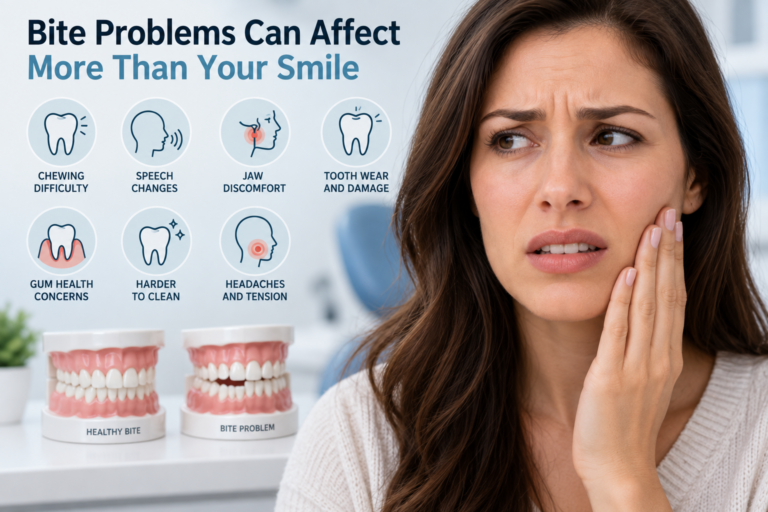
For example, a child may have an underbite, crossbite, open bite, deep bite, or significant overbite. These bite issues can affect chewing, speech, tooth wear, jaw comfort, and long-term dental function.
The American Dental Association’s MouthHealthy resource explains that orthodontics and dentofacial orthopedics focus on diagnosis, prevention, interception, guidance, and correction of bite problems. A healthy bite helps teeth meet properly and can make biting, chewing, and speaking easier. You can review the ADA’s overview of orthodontics and braces.
Because children are still growing, orthodontists may be able to guide certain growth-related issues at the right stage. Waiting too long may reduce some early treatment options.
Crossbites Can Be Easier to Address Early
A crossbite occurs when upper teeth fit inside lower teeth in a way they should not. It can affect the front teeth, back teeth, or one side of the mouth. Crossbites may cause uneven tooth wear, gum problems, jaw shifting, or facial asymmetry if left unmanaged.
Some crossbites are easier to correct when a child is still growing. An orthodontist may recommend monitoring, expansion, or another appliance depending on the child’s age, bite, and growth pattern.
A crossbite is one reason parents should not wait until all permanent teeth are in before seeking an evaluation. Early detection can help determine whether intervention is appropriate before the problem becomes harder to manage.
Crowding Can Be Spotted Before All Adult Teeth Erupt
Crowding happens when there is not enough space for teeth to come in properly. Parents may notice permanent teeth erupting behind baby teeth, teeth turning sideways, or front teeth overlapping. However, crowding can also be predicted before it becomes severe.
An early orthodontic evaluation can assess whether the jaw has enough room for incoming permanent teeth. The orthodontist may look at spacing, tooth size, arch width, baby tooth loss, eruption timing, and X-rays if needed.
Not every crowded smile needs early treatment. Some children are monitored until more teeth come in. In other cases, early steps may help manage space and reduce the likelihood of more complex treatment later.
The American Academy of Pediatric Dentistry states that guidance of eruption and development of the primary, mixed, and permanent dentitions is an important part of comprehensive pediatric oral health care. Its guidance on management of the developing dentition and occlusion explains that early evaluation can help clinicians make informed decisions about timing and appropriate intervention.
Early or Late Loss of Baby Teeth Matters
Baby teeth act as placeholders for permanent teeth. If a baby tooth is lost too early because of decay, injury, or extraction, nearby teeth may shift into the empty space. This can make it harder for the permanent tooth to erupt correctly.
On the other hand, if baby teeth remain too long, they may block or redirect permanent teeth. A permanent tooth may come in behind, beside, or at an angle if the baby tooth does not fall out on schedule.
An orthodontist can evaluate whether tooth eruption is on track. Sometimes no action is needed. Other times, space maintainers, extractions, or monitoring may be recommended.
Parents should mention any history of early baby tooth loss, dental trauma, cavities, or delayed tooth eruption during the evaluation.
Habits Can Affect Bite Development
Childhood habits can influence tooth and jaw development. Thumb sucking, finger sucking, prolonged pacifier use, tongue thrusting, mouth breathing, and certain swallowing patterns may contribute to bite changes over time.
The effect depends on the habit, intensity, duration, and the child’s growth. For example, prolonged thumb sucking may contribute to an open bite or changes in the upper arch. Mouth breathing may be associated with certain oral and facial development patterns, although evaluation should consider the full medical and dental picture.
An early orthodontic evaluation can help parents understand whether a habit is affecting the bite. If needed, the orthodontist may coordinate with a pediatric dentist, physician, ENT specialist, or speech professional depending on the concern.
The goal is not to shame children for habits. It is to guide development and address contributing factors early when appropriate.
Orthodontic Issues Can Affect Chewing and Speech
Orthodontic problems are often viewed as cosmetic, but bite alignment can also affect function. Teeth and jaws help with chewing, speaking, swallowing, and keeping teeth clean.
A child with a significant bite issue may have difficulty biting into food, chewing evenly, closing the lips comfortably, or producing certain sounds. Crowded or overlapping teeth may also be harder to brush and floss effectively.
The ADA notes that a good bite makes biting, chewing, and speaking easier. That is why early orthodontic evaluation is about more than appearance.
If a child struggles with chewing, avoids certain foods, bites the cheeks often, has speech concerns, or seems unable to close the mouth comfortably, parents may want to ask whether an orthodontic evaluation is appropriate.
Early Evaluation Can Help Reduce Future Surprises
Orthodontic care can be a major commitment for families. It may involve appointments, appliances, braces, aligners, retainers, and cost planning. Early evaluation gives parents more time to understand what may be ahead.
If treatment is likely in the future, the orthodontist can explain possible timing, phases, and goals. Some children may need only one phase of treatment in the teen years. Others may benefit from early treatment followed by a second phase later. Some may not need treatment at all.
Knowing this earlier helps families avoid being surprised when a dentist or orthodontist later recommends braces.
It also gives parents time to ask about insurance, payment plans, treatment options, and what signs to watch as the child grows.
Early Treatment Is Not Always Necessary
It is important to be clear: early evaluation does not mean early treatment is always needed. Some orthodontic issues are best treated after more permanent teeth erupt. Others may improve as the child grows. Some children simply need observation.
A reputable orthodontist should explain why treatment is recommended, why waiting is recommended, or why monitoring is appropriate. Parents should feel comfortable asking questions.
Helpful questions include:
What problem do you see?
Does it need treatment now or monitoring?
What happens if we wait?
What are the goals of early treatment?
Will a second phase likely be needed later?
Are there alternatives?
How will this affect long-term dental health?
If early treatment is recommended, parents should understand the reason clearly.
What Happens During a Child’s First Orthodontic Evaluation?
A first orthodontic evaluation is usually straightforward. The orthodontist may examine the child’s teeth, bite, jaw growth, facial balance, tooth eruption, spacing, crowding, and oral habits. X-rays or photographs may be taken if needed.
The provider may ask about dental history, thumb sucking, mouth breathing, snoring, speech concerns, injuries, early tooth loss, family history, and whether the child has any discomfort.
After the exam, the orthodontist may recommend one of three general paths: no treatment needed, monitoring over time, or treatment. If treatment is recommended, they should explain the goals and timeline.
The visit is also an opportunity for parents and children to become familiar with the orthodontic office before treatment is ever needed.
Signs Parents Should Watch For
Even before age 7, parents may notice signs that an orthodontic evaluation could be helpful. These may include:
Early or late loss of baby teeth
Difficulty chewing or biting
Mouth breathing
Thumb sucking after early childhood
Crowded or misplaced teeth
Jaws that shift or make sounds
Biting the cheek or roof of the mouth
Teeth that do not meet properly
A noticeable overbite or underbite
Upper and lower teeth that do not line up
Protruding front teeth
Speech concerns related to oral structure
These signs do not always mean treatment is needed, but they are worth discussing with a dentist or orthodontist.
The Role of the Dentist and Orthodontist
Pediatric dentists and general dentists play an important role in monitoring oral health and development. They may be the first to notice crowding, bite issues, tooth eruption concerns, or habits that affect the mouth.
Orthodontists specialize in diagnosing, preventing, and treating dental and facial irregularities. The ADA explains that orthodontic treatment may be provided by a dentist or orthodontist depending on the provider’s experience and the severity of the case, while orthodontists receive specialized training in this area.
For many families, the dentist and orthodontist work together. The dentist supports overall oral health, while the orthodontist focuses on bite alignment, jaw development, and tooth positioning.
Final Thoughts
Early orthodontic evaluations matter because they help identify developing tooth and jaw issues before they become more complicated. The first visit is not always about starting braces. Often, it is about understanding growth, monitoring eruption, spotting bite problems, and choosing the right timing if treatment is needed.
The American Association of Orthodontists recommends that children have an orthodontic checkup no later than age 7. By that age, an orthodontist can often see enough of the developing bite to determine whether the child needs treatment, monitoring, or simply reassurance.
For parents, early evaluation can bring clarity. It can help answer questions about crowding, crossbites, jaw growth, oral habits, baby tooth loss, and future treatment needs. Most importantly, it supports a proactive approach to a child’s long-term oral health and comfort.