
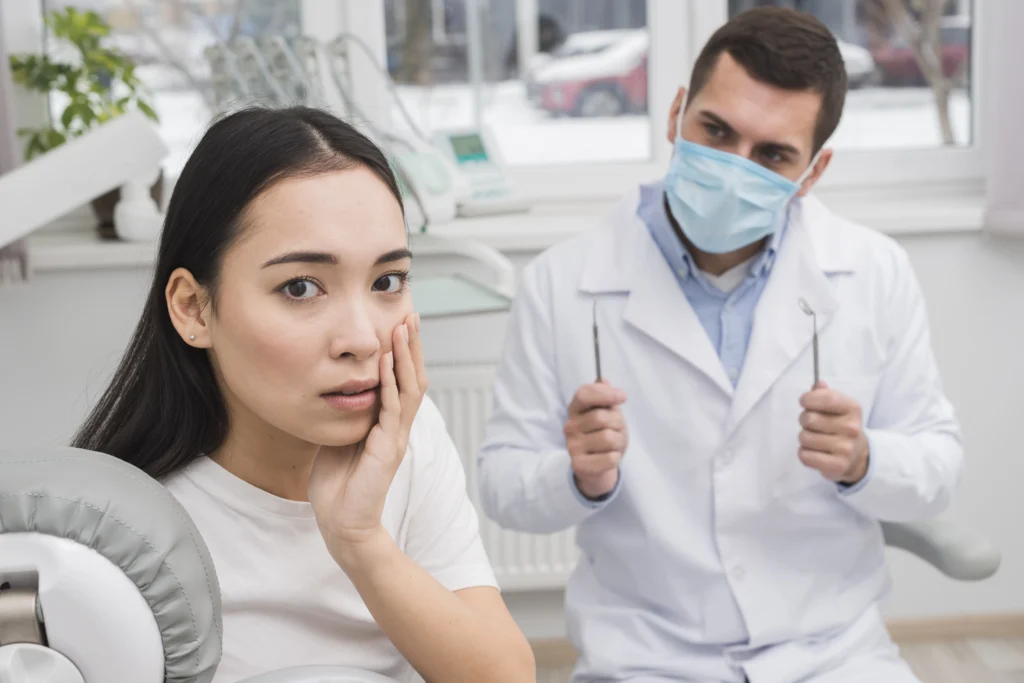
Chewing should normally feel comfortable. If your jaw begins aching when you eat, open your mouth, or bite into certain foods, the discomfort may interfere with daily activities.
Some people notice pain near the ear. Others feel soreness in the cheek muscles, jaw joint, or teeth.
Jaw pain while chewing can have several causes, including temporomandibular disorders, muscle tension, dental infections, cracked teeth, arthritis, and other conditions.
The location and nature of the pain can provide useful clues, but a professional evaluation may be needed to identify the actual source.
Understanding the possible causes can help you determine which healthcare provider to contact and when symptoms deserve urgent attention.
What Is the Temporomandibular Joint?
The temporomandibular joints, often called TMJs, connect the lower jaw to the skull.
They are located near the ears and allow the jaw to open, close, and move during chewing and speaking.
The joints work together with muscles, ligaments, and other surrounding tissues.
When a problem affects this system, a person may experience jaw pain, stiffness, clicking, or difficulty opening comfortably.
The National Institute of Dental and Craniofacial Research provides information about temporomandibular disorders and their symptoms.
What Are Temporomandibular Disorders?
Temporomandibular disorders, or TMDs, include conditions affecting the jaw joints, chewing muscles, and related structures.
Symptoms may include pain during chewing, tenderness around the jaw, headaches, and restricted movement.
Some people also experience clicking or popping.
However, joint sounds alone do not necessarily indicate a condition requiring treatment.
Many people have painless jaw sounds.
The presence of pain, functional difficulty, or locking is more clinically significant than an occasional click.
Can Clenching or Grinding Cause Jaw Pain?
Clenching and grinding place force on the teeth and chewing muscles.
Some people do this during sleep without realizing it.
Others clench their teeth while concentrating or feeling stressed.
Repeated muscle activity may contribute to soreness or fatigue around the jaw.
However, bruxism is not the cause of every temporomandibular disorder.
A dentist can evaluate signs of tooth wear, muscle tenderness, and related symptoms before recommending treatment.
Why Does My Jaw Hurt More With Hard Foods?
Chewing firm foods requires greater force and repeated jaw movement.
If the jaw muscles or joint are irritated, hard foods may increase discomfort.
This may occur with certain temporomandibular disorders.
However, pain concentrated in one tooth during biting may suggest a dental problem rather than a joint condition.
The distinction matters because the treatments are different.
Tell your provider whether the pain feels muscular, joint-related, or concentrated in a particular tooth.
Could a Cracked Tooth Cause Jaw Pain?
Yes.
A cracked tooth may produce sharp pain when biting or releasing pressure.
Patients sometimes describe the discomfort as jaw pain because the precise source is difficult to identify.
A dentist may evaluate the tooth for fractures, decay, or restoration problems.
Dental imaging and bite tests can help, although cracks are not always obvious.
Treating a suspected jaw joint problem without checking the teeth may delay the correct diagnosis.
Can Dental Infections Cause Pain While Chewing?
Yes.
A tooth infection or inflammation around the root can make biting uncomfortable.
Symptoms may include persistent toothache, tenderness, swelling, or sensitivity to temperature.
A dental abscess can sometimes produce facial or jaw pain.
The American Dental Association provides patient information about dental conditions and oral health.
If pain is accompanied by swelling, fever, or drainage, arrange prompt dental evaluation.
Rapidly spreading swelling or breathing and swallowing difficulties require emergency care.
Does Arthritis Affect the Jaw?
Certain forms of arthritis can affect the temporomandibular joints.
Joint inflammation or degeneration may contribute to pain, stiffness, or limited movement.
Patients with known inflammatory arthritis should mention their medical history during dental evaluation.
However, jaw pain alone does not establish arthritis.
The clinician may consider examination findings, other joint symptoms, and additional testing when appropriate.
Treatment depends on the underlying condition.
What About Ear Pain?
The jaw joint is located near the ear.
As a result, jaw-related pain may be felt around the ear even when the ear itself is healthy.
Conversely, ear infections and other ear conditions may sometimes produce discomfort in the surrounding area.
A healthcare provider may need to examine both the jaw and ear.
Do not assume that pain near the ear is always caused by TMD.
Associated symptoms such as hearing changes, discharge, or fever should also be discussed.
Why Does My Jaw Click When I Chew?
Clicking may occur when structures within the jaw joint move during opening and closing.
In some people, this is associated with internal joint changes.
However, painless clicking is common and does not automatically require treatment.
Clicking accompanied by pain, locking, or difficulty chewing deserves evaluation.
The NIDCR cautions that many jaw sounds without pain or movement limitation do not need treatment.
The goal is to address symptoms and function rather than eliminate every harmless sound.
Can Stress Make Jaw Pain Worse?
Stress can affect muscle activity, sleep, and pain sensitivity.
Some people clench their jaws more frequently during demanding periods.
Stress may also make existing discomfort feel more intense.
However, jaw pain should not automatically be attributed to stress without examining other causes.
Dental disease, joint conditions, and other medical problems may be present.
Stress management may be useful as part of a broader plan, but it should not replace proper diagnosis.
When Is Jaw Pain a Medical Emergency?
Jaw discomfort should be evaluated urgently when associated with significant swelling, fever, or a suspected serious infection.
If the mouth becomes difficult to open because of swelling or pain, prompt assessment may be necessary.
Jaw pain can also occasionally occur with cardiac symptoms.
If jaw discomfort occurs with chest pressure, shortness of breath, sweating, nausea, or other symptoms suggesting a heart attack, seek emergency medical care immediately.
Do not assume that every episode of jaw pain is dental.
How Is Chewing-Related Jaw Pain Diagnosed?
A dentist or medical clinician may ask where the pain occurs, when it started, and which activities make it worse.
The examination may include evaluating tooth health, chewing muscles, jaw joint movement, and the bite.
Imaging may be considered when indicated.
For complex or persistent symptoms, referral to a specialist may be appropriate.
The goal is to identify a treatable cause without relying on unnecessary procedures.
What Treatments May Help TMD?
Treatment depends on the type and severity of the disorder.
The NIDCR recommends beginning with conservative approaches in many cases.
These may include reducing aggravating activities, selecting softer foods temporarily, and using appropriate self-management strategies.
A clinician may also consider physical therapy, medications, or other individualized approaches.
Permanent bite changes, surgery, and other irreversible interventions should not be routine first-line treatment for uncomplicated TMD symptoms.
Should You Use a Nightguard?
A dentist may recommend an oral appliance for certain patients, particularly when grinding or related concerns are present.
However, appliances are not appropriate for every cause of jaw pain.
They should be evaluated and fitted based on the individual’s condition.
An over-the-counter guard that changes the bite or worsens symptoms may not be helpful.
Discuss potential benefits, limitations, and follow-up requirements with your dentist.
What Can You Do Before Your Appointment?
If symptoms are mild and no urgent signs are present, avoid habits that significantly increase pain.
Temporarily choose foods that are easier to chew.
Avoid repeatedly testing the jaw by opening it as widely as possible.
Do not force a locked jaw.
Keep track of whether symptoms occur with chewing, yawning, speaking, or waking.
These observations can help the clinician identify patterns.
Final Thoughts
Jaw pain while chewing can arise from several causes, including temporomandibular disorders, muscle discomfort, cracked teeth, infections, and joint conditions.
Because symptoms overlap, the correct diagnosis matters more than assuming the pain is caused by one structure.
Persistent or worsening discomfort deserves dental or medical evaluation.
Seek emergency care for signs of a serious infection or possible cardiac symptoms.
A careful assessment can help identify appropriate treatment and prevent unnecessary or ineffective procedures.