
Bleeding gums can be alarming, especially when it happens during brushing, flossing, or eating. Some people notice a little pink in the sink once in a while. Others experience frequent bleeding, tenderness, swelling, or gums that look red and irritated. While occasional gum irritation can happen, bleeding gums are not something to ignore if they keep coming back.
Healthy gums usually should not bleed with normal brushing and flossing. When gums bleed regularly, it may be a sign of inflammation, plaque buildup, gum disease, brushing too hard, medication effects, hormonal changes, nutritional concerns, or another health-related issue. The American Dental Association notes that bleeding gums can be a sign of gingivitis, which is the early stage of gum disease, and the CDC explains that gum diseases involve inflammation and infection of the tissues that support the teeth.
The good news is that many causes of bleeding gums can be managed, especially when they are caught early. However, persistent bleeding should be evaluated by a dentist so the underlying cause can be identified.
Here are the most common causes of bleeding gums and what they may mean.
Gingivitis
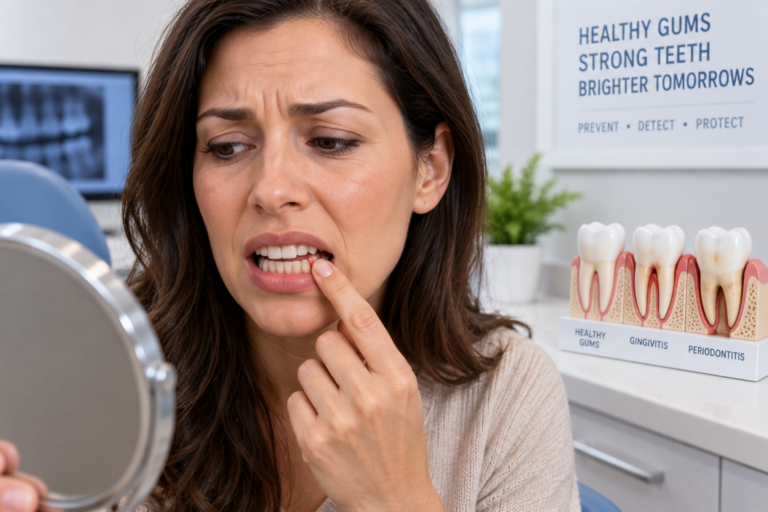
Gingivitis is one of the most common reasons gums bleed. It is the earliest stage of gum disease and usually happens when plaque builds up along the gumline. Plaque is a sticky film of bacteria that forms on teeth. If it is not removed through brushing, flossing, and professional cleanings, it can irritate the gums.
Mayo Clinic describes gingivitis as a common and mild form of gum disease that causes irritation, redness, swelling, and bleeding of the gum tissue around the base of the teeth. Cleveland Clinic also explains that gingivitis develops when plaque, tartar, and bacteria build up on teeth, leading to red, swollen, bleeding gums.
The encouraging part is that gingivitis is often reversible with better oral hygiene and professional dental care. But if it is ignored, it can progress into more serious gum disease.
Periodontal Disease
When gum inflammation becomes more advanced, it may develop into periodontitis, also called periodontal disease. Periodontitis affects the tissues and bone that support the teeth. Unlike gingivitis, periodontitis can cause lasting damage if not treated.
The National Institute of Dental and Craniofacial Research explains that periodontal disease is an infection of the tissues that hold teeth in place. It is typically caused by poor brushing and flossing habits that allow plaque to build up and harden. NIDCR notes that gum disease can begin with swollen, red, and bleeding gums and, if untreated, can spread to the bone around the teeth.
Signs of more advanced gum disease may include persistent bad breath, gums pulling away from teeth, loose teeth, pain when chewing, gum recession, and changes in how teeth fit together. Bleeding gums may be one of the first signs that something is wrong.
Plaque and Tartar Buildup
Even if a person brushes daily, plaque can still collect in hard-to-reach areas. When plaque is not removed, it can harden into tartar, also called calculus. Tartar cannot be removed with regular brushing and flossing at home. It usually requires professional dental cleaning.
Tartar buildup along the gumline can irritate gum tissue and make bleeding more likely. It can also make it harder to clean effectively, which allows more bacteria to collect.
The ADA’s patient guidance on keeping gums healthy explains that gum disease can develop when plaque is allowed to collect along the gumline and between the teeth, which can cause gums to swell and bleed. Routine dental cleanings help remove hardened buildup before it contributes to more serious problems.
Brushing Too Hard
Bleeding gums are not always caused by gum disease. Sometimes they happen because a person brushes too aggressively. Using a hard-bristled toothbrush, scrubbing back and forth, or applying too much pressure can irritate the gums and damage delicate tissue.
Aggressive brushing may also contribute to gum recession over time. When the gums pull away from the teeth, the tooth roots may become exposed, which can lead to sensitivity and a higher risk of irritation.
A soft-bristled toothbrush is usually recommended for daily cleaning. Gentle, thorough brushing is more effective and safer than forceful scrubbing. If gums bleed only after brushing hard, switching to a softer brush and improving technique may help, but ongoing bleeding should still be checked.
New or Inconsistent Flossing
Some people notice bleeding when they start flossing after not doing it regularly. This can happen because the gums are inflamed from plaque buildup between the teeth. When floss finally reaches those areas, the irritated gums may bleed.
This does not mean flossing is bad. It may mean the gums need consistent care. If bleeding improves after several days or weeks of gentle daily flossing, that is often a good sign. But if bleeding continues, worsens, or is paired with swelling, pain, or bad breath, a dental exam is important.
The CDC notes that gingivitis is preventable and reversible with good oral hygiene, including brushing twice daily, flossing daily, and professional treatment. Its gum disease facts also emphasize that bleeding gums can be an early sign of gum disease.
Hormonal Changes
Hormonal changes can make gums more sensitive and more likely to bleed. This may happen during puberty, menstruation, pregnancy, and menopause. During pregnancy, some people develop pregnancy gingivitis, which can cause swollen, tender, or bleeding gums.
Hormonal changes can affect how gum tissue responds to plaque and bacteria. Even a small amount of buildup may trigger more noticeable gum inflammation during certain life stages.
The National Institute of Dental and Craniofacial Research lists hormonal changes in girls and women as a risk factor that can make gums more sensitive and make it easier for gingivitis to develop. Its periodontal disease guide also notes other risk factors such as smoking, diabetes, medications, and genetic susceptibility.
If gum bleeding begins during pregnancy or another hormonal shift, it is still worth discussing with a dentist. Dental care during pregnancy is important, and gum inflammation should not be ignored.
Smoking or Tobacco Use
Smoking and tobacco use can increase the risk of gum disease and make gum problems harder to treat. Tobacco affects the mouth in several ways, including reducing the body’s ability to fight infection and heal properly.
Interestingly, smokers may not always notice as much bleeding because nicotine can affect blood flow to the gums. That does not mean the gums are healthy. Gum disease can still be present and may progress without obvious bleeding.
The CDC identifies smoking as an important risk factor for periodontal disease, and NIDCR states that smoking is one of the most significant risk factors associated with gum disease and can reduce the chances of successful treatment.
Anyone who smokes or uses tobacco and notices gum bleeding, gum recession, bad breath, or loose teeth should schedule a dental evaluation.
Diabetes and Blood Sugar Issues
Diabetes can affect gum health. People with diabetes may be at higher risk for gum disease, especially if blood sugar is not well managed. Gum disease can also make blood sugar control more difficult, creating a two-way relationship between oral health and overall health.
Mayo Clinic notes that certain diseases, including diabetes, can increase the risk of periodontitis. Its overview of periodontitis symptoms and causes also explains that periodontitis is linked with problems controlling blood sugar in diabetes.
For people with diabetes, bleeding gums should be taken seriously. Regular dental care, good oral hygiene, and communication between dental and medical providers can help support both oral and overall health.
Certain Medications
Some medications can contribute to bleeding gums or gum changes. Blood thinners may make bleeding more noticeable. Certain medications can cause dry mouth, which may increase the risk of plaque buildup and gum irritation. Some medications may also contribute to gum enlargement, making it harder to clean around the gumline.
If gum bleeding starts after beginning a new medication, do not stop taking the medication without talking to your healthcare provider. Instead, let your dentist and physician know what is happening. They can help determine whether the medication may be contributing and what steps are appropriate.
It is helpful to bring a complete list of medications, supplements, and over-the-counter products to dental appointments.
Vitamin Deficiencies
Less commonly, bleeding gums may be related to nutritional deficiencies. Vitamin C deficiency can affect gum health and tissue repair. Vitamin K plays a role in normal blood clotting. Severe deficiencies are not the most common cause of bleeding gums, but nutrition can still influence oral and overall health.
A balanced diet supports healthy gums, immune function, and tissue healing. If gum bleeding happens along with easy bruising, fatigue, poor wound healing, or other unusual symptoms, a healthcare provider may need to evaluate for medical or nutritional causes.
Most bleeding gums are related to plaque and gum inflammation, but unexplained bleeding should not be ignored.
Ill-Fitting Dental Appliances
Dentures, partial dentures, retainers, aligners, night guards, and other dental appliances can irritate the gums if they do not fit properly. Rubbing, pressure spots, trapped food, or poor cleaning can lead to soreness and bleeding.
Orthodontic appliances can also make oral hygiene more challenging. Braces, wires, and aligners require careful cleaning to prevent plaque buildup around the teeth and gums.
If a dental appliance causes gum irritation or bleeding, schedule a dental visit. Adjustments may be needed, and the dentist can also check for infection, sores, or cleaning issues.
Mouth Breathing and Dry Mouth
Dry mouth can contribute to gum irritation and plaque buildup. Saliva helps wash away food particles and supports the mouth’s natural balance. When the mouth is dry, bacteria can collect more easily, and gums may become more irritated.
Mouth breathing, certain medications, dehydration, tobacco use, and some medical conditions can contribute to dry mouth. People with dry mouth may also notice bad breath, sticky saliva, cracked lips, burning sensations, or more cavities.
If dry mouth is frequent, mention it to a dentist. They can help identify possible causes and recommend strategies to protect the teeth and gums.
Poorly Controlled Dental Plaque Around Restorations
Fillings, crowns, bridges, implants, and other dental restorations require careful cleaning. Plaque can build up around the edges of crowns, under bridgework, around implant restorations, and near old fillings.
If a restoration does not fit well, has a rough edge, or is difficult to clean around, the nearby gums may become inflamed and bleed. Food may also get trapped in certain areas, making irritation worse.
A dentist can evaluate restorations and recommend cleaning tools such as floss threaders, interdental brushes, water flossers, or other options depending on the situation.
When Bleeding Gums Need Dental Attention
Bleeding gums should be evaluated if the bleeding is frequent, persistent, worsening, painful, or accompanied by swelling, bad breath, gum recession, loose teeth, pus, tooth sensitivity, or pain when chewing.
The ADA’s bleeding gums resource explains that bleeding gums can be a sign of gingivitis, and early attention can help protect gum health. A dentist can determine whether the bleeding is due to brushing technique, gum inflammation, periodontal disease, dental appliances, medications, or another issue.
Seek prompt care if bleeding is heavy, unexplained, difficult to stop, or associated with other symptoms such as fever, facial swelling, or signs of infection.
How Dentists Treat Bleeding Gums
Treatment depends on the cause. If bleeding is due to gingivitis, a professional cleaning and improved home care may be enough to help gums heal. If tartar is present, it must be removed professionally.
If periodontitis is present, treatment may involve deeper cleaning such as scaling and root planing, more frequent periodontal maintenance, medication in some cases, or referral to a periodontist. The ADA explains that periodontal treatment is aimed at removing harmful plaque biofilm from the tooth surface and creating conditions that allow health to be maintained.
If bleeding is related to brushing technique, appliances, medication, dry mouth, or another factor, treatment will be tailored to that cause.
Final Thoughts
The most common causes of bleeding gums include gingivitis, periodontal disease, plaque and tartar buildup, brushing too hard, inconsistent flossing, hormonal changes, smoking, diabetes, certain medications, vitamin deficiencies, ill-fitting dental appliances, dry mouth, and buildup around restorations.
Occasional mild bleeding may happen, but regular bleeding is a sign that the gums need attention. Healthy gums usually should not bleed with normal daily care.
The earlier gum problems are identified, the easier they may be to manage. If your gums bleed often, schedule a dental exam. A dentist can find the cause, recommend treatment, and help protect both your oral health and long-term comfort.