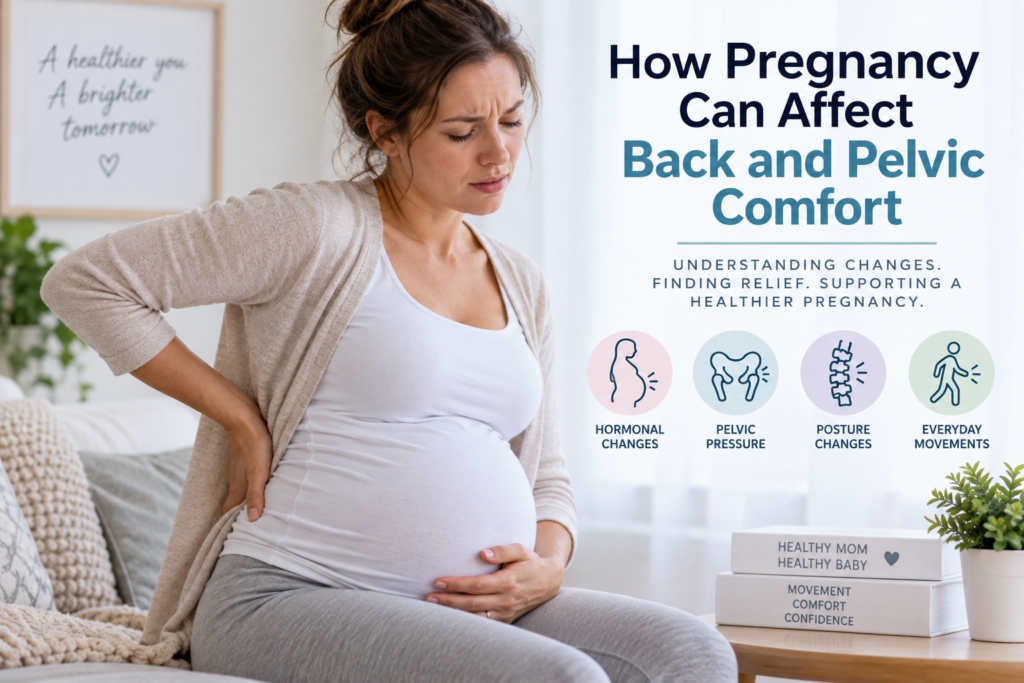
Pregnancy can change the way your body feels from head to toe, and back or pelvic discomfort is one of the most common complaints. As the body adapts to a growing baby, changes in posture, weight distribution, hormones, muscles, joints, and daily movement patterns can all affect comfort.
Some discomfort may feel like lower back aching. Some may feel like pressure in the pelvis, hips, pubic bone, buttocks, or tailbone. Some people notice pain when walking, rolling over in bed, climbing stairs, standing from a chair, or getting in and out of a car. Others feel more stiffness after sitting for long periods or standing all day.
Back and pelvic discomfort during pregnancy is common, but that does not mean it should be dismissed. The American College of Obstetricians and Gynecologists explains that back pain during pregnancy is common and may be related to posture changes, abdominal muscle changes, hormones, and stress on the body. ACOG also notes that back pain can sometimes be a symptom of preterm labor, so new or concerning symptoms should be discussed with an obstetric care provider. ACOG is a helpful patient resource for understanding pregnancy-related back pain.
Here is how pregnancy can affect back and pelvic comfort, and when it may be time to ask for help.
Your Center of Gravity Changes
As pregnancy progresses, the growing abdomen shifts the body’s center of gravity forward. To compensate, many people naturally adjust their posture. They may lean back slightly, widen their stance, lock their knees, or change the way they walk.
These changes can place more stress on the lower back, hips, and pelvis. Muscles that were not working as hard before may begin to fatigue. The lower back may feel tight or achy, especially after standing, walking, or lifting.
Mayo Clinic notes that good posture can help reduce strain during pregnancy and recommends standing tall, holding the chest high, keeping the shoulders relaxed, and avoiding locking the knees. Mayo Clinic’s pregnancy back pain tips are a useful resource for posture and daily comfort strategies.
The Clinic Corner’s article on how poor posture can affect your neck, back, and daily comfort is also helpful because posture changes can affect more than one area of the body.
Hormonal Changes Can Affect Joints and Ligaments
During pregnancy, the body produces hormones that help prepare the body for childbirth. These hormonal changes can affect ligaments and connective tissues, including those around the pelvis and lower back.
When ligaments become more relaxed, the joints may feel less stable. This does not mean something is “wrong,” but it can make certain movements feel different. Twisting, standing on one leg, climbing stairs, or rolling over in bed may feel more uncomfortable because the pelvis and lower back are adapting to extra mobility and load.
This is one reason pregnancy discomfort can feel different from ordinary back pain. It may not be only about muscle tightness. It can involve joint stress, ligament sensitivity, muscle compensation, and changing movement patterns.
If pain starts interfering with walking, sleep, work, or daily activities, it is worth discussing with a healthcare provider.
Abdominal Muscles Stretch and Support Changes
The abdominal muscles help support the trunk and pelvis. During pregnancy, those muscles stretch as the belly grows. As the abdominal wall changes, the back muscles may take on more work to support posture and movement.
This can contribute to lower back fatigue, especially during activities such as lifting, carrying groceries, standing for long periods, or getting up from low furniture.
Some people also develop diastasis recti, a separation of the abdominal muscles along the midline. This can affect core support and may contribute to feelings of weakness or instability during and after pregnancy. A healthcare provider, physical therapist, or qualified prenatal specialist can help evaluate core function and recommend safe exercises when appropriate.
The goal during pregnancy is not intense core training. It is safe, controlled movement that supports comfort and function.
Pelvic Girdle Pain Can Feel Different From Back Pain
Pelvic discomfort during pregnancy may be related to pregnancy-related pelvic girdle pain, sometimes called PGP. The NHS explains that pelvic girdle pain can cause pain in the pubic area, lower back, hips, groin, thighs, or buttocks, and may worsen with walking, stairs, standing on one leg, or turning over in bed. NHS pelvic pain in pregnancy guidance explains common symptoms and when to ask for care.
This type of discomfort may feel sharp, aching, grinding, clicking, or unstable. It may be felt in the front of the pelvis near the pubic bone, in the sacroiliac joints near the lower back, or around the hips.
Pelvic girdle pain can vary. Some people have mild discomfort only during certain movements. Others find that daily tasks become difficult. Early support can help, so it is better to bring it up than assume it is just part of pregnancy.
Walking Patterns May Change
As the body changes, walking may feel different. Some people develop a wider stance. Others shorten their stride, shift weight from side to side, or feel discomfort when one leg moves ahead of the other.
These changes can affect the lower back, hips, pelvis, knees, and feet. If one side of the body feels more strained than the other, muscles may tighten to compensate.
Pelvic discomfort may become worse with long walks, uneven ground, stairs, or quick changes in direction. Back discomfort may increase when walking for long periods without support.
Comfort strategies may include supportive shoes, shorter walks, pacing activity, avoiding sudden twisting, and asking a provider about safe strengthening or stretching options.
Sitting for Long Periods Can Increase Stiffness
Pregnancy-related back and pelvic discomfort is not only a standing or walking issue. Sitting for long periods can also contribute to stiffness, especially in the lower back, hips, and pelvis.
An office chair, car seat, couch, or dining chair may feel different as pregnancy progresses. The pelvis may tilt differently, the lower back may need more support, and the hips may feel tighter after prolonged sitting.
Simple changes may help. A small lumbar pillow, foot support, frequent position changes, and short walking breaks may reduce stiffness. If sitting triggers pelvic pain, keeping the knees and hips more level and avoiding crossed legs may help some people feel more stable.
The Clinic Corner’s article on common reasons people visit a chiropractor for back pain explains how daily habits, posture, and movement patterns can contribute to back discomfort.
Sleep Position Can Affect Comfort
Finding a comfortable sleep position can become harder during pregnancy. Back discomfort, hip pressure, pelvic pain, and belly support can all affect sleep.
Many pregnant people feel better sleeping on their side with a pillow between the knees. A pillow under the abdomen or behind the back may also help reduce strain. If rolling over in bed triggers pelvic pain, moving slowly and keeping the knees closer together may be more comfortable.
Mayo Clinic suggests sleeping on the side and using pillows for support as one way to help with pregnancy-related back discomfort.
Sleep discomfort should still be discussed if it becomes severe, if pain is worsening, or if symptoms are interfering with daily function.
Exercise May Help, When Approved
Movement can often help support back and pelvic comfort during pregnancy, but exercise should be appropriate for the person and the pregnancy. ACOG states that physical activity during pregnancy can reduce back pain and that body changes during pregnancy place stress on joints and muscles, especially in the pelvis and lower back. ACOG exercise during pregnancy guidance is a useful resource for general safety considerations.
Gentle activity may include walking, prenatal yoga, swimming, stretching, pelvic tilts, or provider-approved strengthening exercises. The right choice depends on symptoms, fitness level, medical history, and pregnancy risk factors.
If exercise causes pain, dizziness, bleeding, contractions, fluid leakage, chest pain, or other concerning symptoms, stop and contact a healthcare provider. Exercise during pregnancy should support comfort, not push through warning signs.
Lifting and Daily Movements May Need Adjustment
Pregnancy can change how the body tolerates lifting, bending, carrying, and reaching. Lifting with poor mechanics may increase strain on the lower back and pelvis.
Helpful strategies may include bending at the knees, keeping objects close to the body, avoiding twisting while lifting, asking for help with heavy items, and breaking tasks into smaller steps. If carrying a toddler, laundry basket, groceries, or work bag worsens pain, it may be time to adjust how often and how much you lift.
Daily movement patterns matter. Getting out of bed, standing from a chair, climbing stairs, and getting into a car may all feel different during pregnancy. Moving more slowly and keeping movements controlled may reduce discomfort.
Previous Back or Pelvic Issues May Flare
People with a history of back pain, pelvic pain, hip problems, car accidents, sports injuries, scoliosis, disc issues, or prior pregnancy-related pain may be more aware of discomfort during pregnancy. The added physical changes can aggravate old patterns or reveal weaknesses that were manageable before.
That does not mean discomfort is inevitable or untreatable. It means early communication matters. Tell your obstetric provider if you have a history of back or pelvic problems, especially if symptoms are worsening or limiting daily life.
The Clinic Corner’s article on what to do after a minor car accident before pain gets worse is relevant for readers with a prior injury history, because old injuries can influence how the body responds to new physical stress.
Chiropractic Care and Pregnancy Comfort
Some pregnant people consider chiropractic care for back or pelvic discomfort. The safest approach is to discuss symptoms with an obstetric provider first, especially if pain is new, severe, or associated with other symptoms.
If chiropractic care is considered, it is important to choose a provider who is comfortable working with pregnant patients, uses pregnancy-appropriate positioning, avoids unnecessary pressure on the abdomen, and communicates clearly about goals and limitations.
Chiropractic care should not replace prenatal care, emergency care, or evaluation for concerning symptoms. It may be one part of a broader comfort plan that includes obstetric guidance, physical therapy, movement changes, supportive devices, and home strategies.
The Clinic Corner’s article on what to expect during a chiropractic adjustment can help readers understand the importance of communication, comfort, and asking questions before treatment.
Support Belts May Help Some People
Some pregnant people find relief with maternity support belts or pelvic support garments. These supports may help reduce the feeling of heaviness or instability by supporting the abdomen and pelvis during activity.
They are not a cure for every type of pain, and fit matters. A belt that is too tight, worn incorrectly, or used all day without guidance may not be helpful. If you are considering a support belt, ask your provider whether it makes sense for your symptoms.
Support tools often work best when combined with movement strategies, posture changes, and activity modification.
When Back or Pelvic Pain Should Be Checked
Back and pelvic discomfort may be common, but certain symptoms deserve prompt attention. Contact your obstetric provider if pain is severe, sudden, worsening, associated with fever, burning urination, numbness, weakness, vaginal bleeding, contractions, fluid leakage, or pain that feels rhythmic or cramping.
ACOG notes that back pain can sometimes be a symptom of preterm labor, and Mayo Clinic also notes that back pain during pregnancy can be a sign of preterm labor or urinary tract infection.
You should also ask for help if pain makes it hard to walk, sleep, work, climb stairs, or care for yourself. You do not have to wait until symptoms are unbearable.
Questions to Ask Your Provider
If pregnancy-related back or pelvic discomfort is affecting you, bring specific questions to your next visit. You might ask:
Is this normal pregnancy discomfort or something that needs evaluation?
Could this be pelvic girdle pain?
Are there movements I should avoid?
Would physical therapy help?
Is a support belt appropriate?
Are there safe stretches or exercises I can do?
Are there warning signs I should watch for?
Is chiropractic care appropriate in my situation?
Could this be related to a urinary tract infection or contractions?
The Clinic Corner’s article on how to talk to your provider about symptoms that feel embarrassing is useful if you feel awkward bringing up pelvic pain, bladder symptoms, sexual discomfort, or movement limitations.
Final Thoughts
Pregnancy can affect back and pelvic comfort in several ways. A changing center of gravity, hormonal shifts, ligament changes, abdominal muscle stretching, posture changes, sleep position, activity demands, and pelvic girdle stress can all contribute to discomfort.
Some discomfort may be manageable with posture changes, supportive pillows, gentle movement, activity pacing, and provider-approved exercises. Other symptoms may need evaluation, especially if pain is severe, sudden, worsening, or paired with warning signs like bleeding, contractions, fever, weakness, urinary symptoms, or fluid leakage.
Back and pelvic discomfort during pregnancy is common, but it is still worth discussing. The right guidance can help you move more comfortably, protect your body, and know when symptoms need more attention.