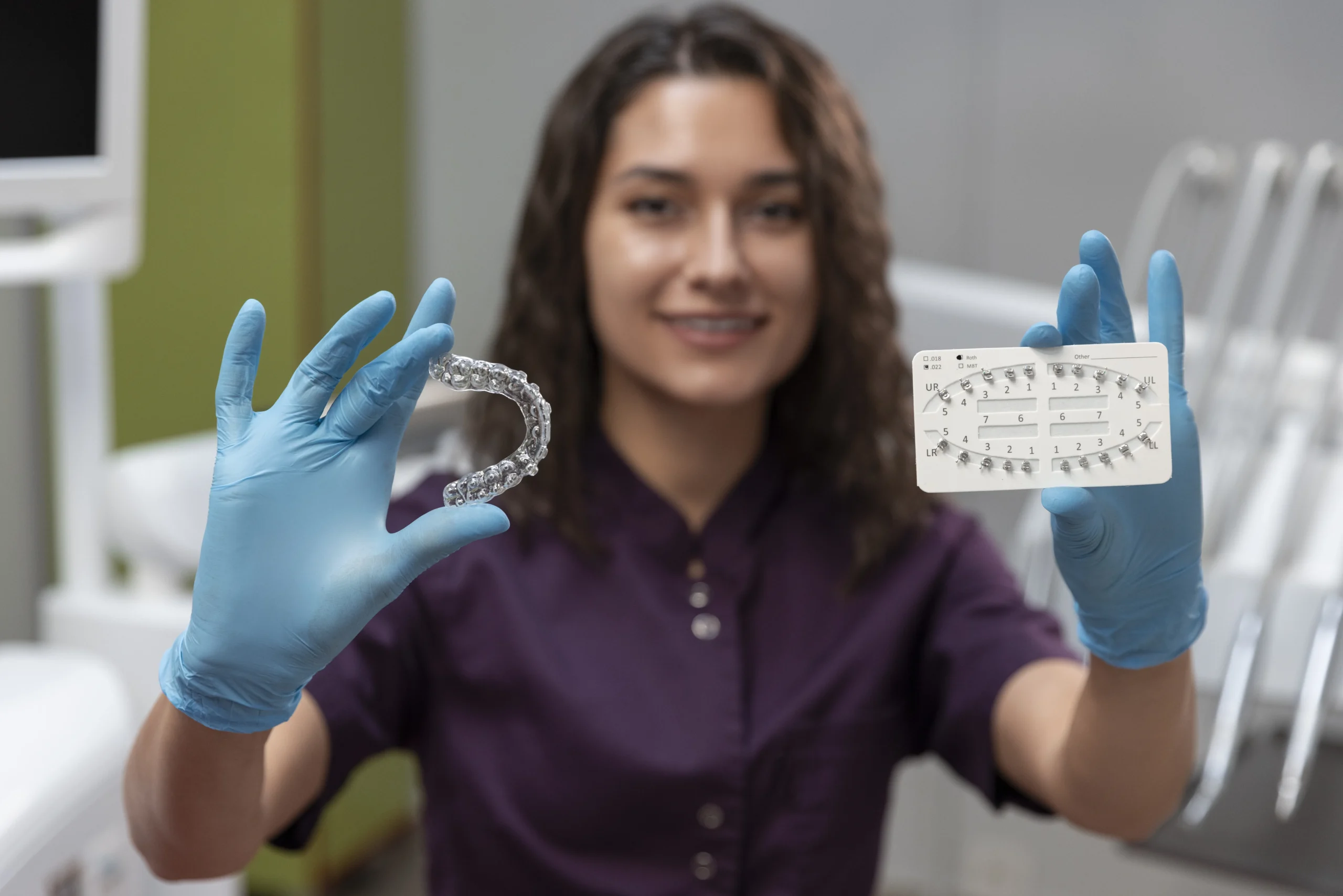
Orthodontic treatment has advanced significantly, giving patients more options than ever before. Today, the most common choices are traditional metal braces and clear aligners like Invisalign. Both treatments are designed to straighten teeth, improve bite alignment, and enhance overall oral health. However, they work in different ways and offer unique advantages depending on your needs.
Traditional braces use brackets and wires to apply continuous pressure on the teeth. They are highly effective for correcting complex orthodontic cases, including severe crowding, rotations, and significant bite problems. Because they remain fixed in place, they work consistently without requiring patient compliance beyond proper hygiene.
Clear aligners, on the other hand, are removable trays custom made to gradually shift teeth. They are nearly invisible and can be taken out for meals and brushing. This makes them a popular choice for teens and adults seeking a discreet treatment option.

Choosing between braces and clear aligners depends on several factors, including the complexity of your case, your lifestyle, and your personal preferences. While aligners provide flexibility and aesthetics, braces may offer more precise control for complicated movements. An orthodontic consultation is essential to determine which solution will deliver the most predictable and efficient results.
Comfort is another important consideration. Aligners typically cause less irritation because there are no metal components rubbing against the cheeks or lips. However, both treatments may create temporary pressure as teeth gradually shift into their proper positions. This discomfort is usually mild and manageable.
Ultimately, the best orthodontic treatment is the one tailored to your specific dental condition and goals. A customized plan ensures not only a straighter smile but also improved bite function, better hygiene access, and long-term stability.