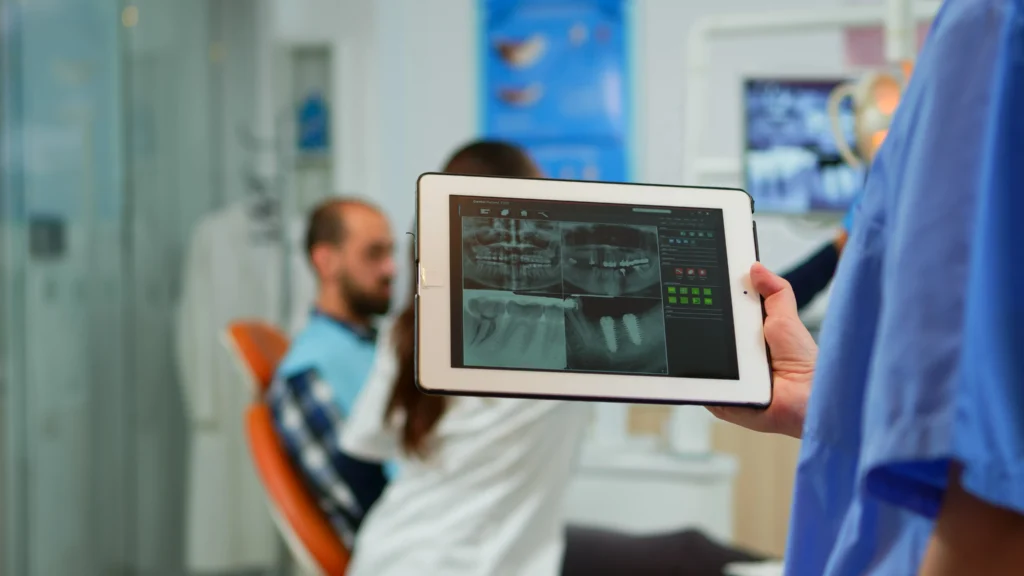
Digital planning in implantology has revolutionized the precision and predictability of implant treatments. Using computed tomography and specialized software, it is possible to analyze bone volume, density, and critical anatomical structures before surgery. This reduces risks and significantly improves clinical outcomes.
The integration of intraoral scans with three-dimensional images allows for the design of the ideal implant position, respecting prosthetic and biological parameters. This guided restorative approach ensures better functional and aesthetic alignment from the initial stage.
Furthermore, surgery guided by 3D-printed stents facilitates more precise placement, minimizing extensive incisions and reducing surgical time.

Digital planning also optimizes communication with the laboratory and the patient. Previewing the outcome improves understanding of the treatment and strengthens confidence in the proposed procedure.
From a clinical perspective, this methodology reduces complications associated with poor angulation or inadequate positioning. Three-dimensional precision allows for the preservation of sensitive anatomical structures.
Adopting digital tools in implantology not only increases surgical safety but also raises the professional standard. The combination of advanced diagnostics, virtual planning, and guided execution consolidates more predictable and efficient treatments, aligned with modern dentistry.